
Chapter 4: Strategic Goals and Critical Success Factors of an IT Strategy
Chapter 4 of my master's thesis "Outsourcing the IT Strategy Development Process in Austrian Small and Micro Enterprises"
Contents
This article series contains my master’s thesis “Outsourcing the IT Strategy Development Process in Austrian Small and Micro Enterprises”, which I wrote as part of the university program Management in Information and Business Technologies at the Alpen-Adria-Universität Klagenfurt.
- Chapter: Introduction
- Chapter: Definitions
- Chapter: Relevant Environments of Small and Micro Enterprises in Austria
- Chapter: Strategic Goals and Critical Success Factors of an IT Strategy
- Chapter: Strategic Courses of Action for Small and Micro Enterprises Regarding the Use of Information Technology
- Chapter: IT Controlling in Small and Micro Businesses
- Chapter: Summary and Outlook
4. Strategic Goals and Critical Success Factors of an IT Strategy
4.1. Defining Strategic Goals
Before developing strategic goals, defining success factors and working out measures, the general strategic principles should be called to mind once more. These principles - for example “simplicity”, “exploiting synergies” and “concentration of forces” - apply to small and large companies alike, must always refer to the corporate strategy and must be formulated in a way everyone affected can understand.1 The basic strategy must be kept concise and in generally understandable form and must clearly present the positioning of IT, the objectives, strengths, weaknesses and the risks to be expected. 2
In the first step, the strategic goals are made concrete and precise partial strategies are defined for specific areas of the company.3 Examples of strategic goals could be:
- Optimizing the IT service processes
- Standardizing the IT architecture
- Increasing system availability
- Reducing IT costs
- Increasing employee loyalty
These goals and the associated partial strategies must be aligned exactly with the corporate strategy. For better understanding, the defined goals are derived into a cause-and-effect chain, which could look like the one shown in Figure 9:4
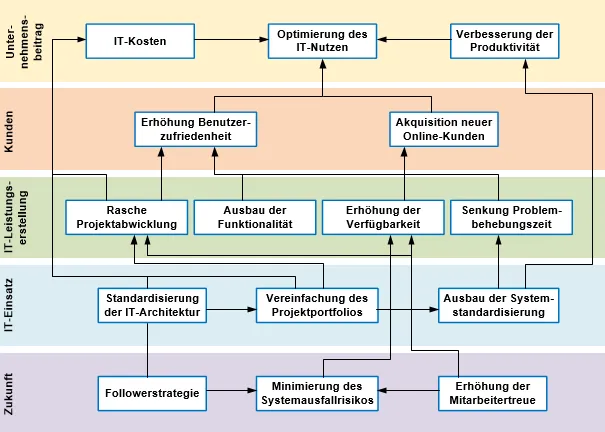 Figure 9: Cause-and-effect chain of strategic IT goals.5
Such a presentation of the goals is mainly meant to serve as a “map” for orientation in the strategy process. Since strategic goals are planned for the long term, the need for adjustment can always arise.6
4.2. Determining Critical Success Factors and Key Figures
The so-called “critical success factors” are the core aspects that contribute significantly to a company’s success. They must therefore be checked and evaluated continuously.7 The so-called “key figures” serve as the tool for this. These key figures - also called “key performance indicators” (KPIs) or “metrics” - serve to operationalize the strategic goals by making them measurable.8 Key figures are divided into leading and lagging indicators. Leading indicators provide information on the development before, lagging indicators after the goal has been achieved. Leading indicators are therefore well suited to ongoing checks during implementation, while lagging indicators make an important contribution to controlling.9 The following properties should be defined for every key figure:10
- Name
- Goal
- Calculation method or mathematical formula
- Form of presentation
- A description to clarify the significance of the key figure
Table 2 offers a list of example strategic goals with the associated success factors and key figures.
| Strategic goals | Critical success factors | Key figures: leading indicators | Key figures: lagging indicators |
|---|---|---|---|
| Optimizing IT benefit | Effective use & efficient IT service production | Realistic benefit forecast of systems | Proof of systems with successful benefit |
| Reducing IT costs | Keeping the IT budget | Size of the IT budget | Change in IT costs |
| Improving productivity | Concentrating on core activities | Administrative effort | Billed productive hours |
| Acquiring new online customers | Active marketing of online products | Number of contacts for online products | Number of new contracts |
| Higher usability | Good complaint management | Number of complaints per employee | User satisfaction |
| Reducing problem resolution time | Enough support staff | Reported problems per support employee | Problem resolution time |
| Increasing availability | Stable IT systems | Number of system outages | Availability |
| Extending functionality | Competent development department | Number of planned new functions | Number of implemented new functions |
| Reducing project cancellations | Lower workload, less staff turnover | Number of projects per employee | Project cancellations |
| Extending system standardization | Use of standard systems | Planned non-standardized systems | Standardized production systems |
| Simplifying the project portfolio | Reducing parallel projects | Number of new projects | Number of completed projects |
| Standardizing the IT architecture | Clear and simple architecture | Systems that do not match the architecture | Systems that match the architecture |
| Increasing employee loyalty | Good working atmosphere, employee training | Employee satisfaction | Turnover rate |
| Minimizing the risk of system outages | Effective risk management | Recovery concepts | Number of system outages |
| Follower strategy | Technical competence | Technology evaluation | Number of new versions |
Table 2: Goals, success factors and key figures of an IT strategy.11
Concentrating on a few meaningful key figures is especially important for small businesses, since companies can only be managed sensibly with a manageable number of key figures.12 Blankenhorn and Thamm also recommend starting with simple reporting, for example built in Microsoft Excel.13
Especially when working with external service providers, care must be taken that the key figures are aligned exactly. The measurement and calculation methods must be made transparent and comprehensible for both parties to prevent misunderstandings and conflicts. In outsourcing projects, the key figures should therefore always be derived from the critical success factors jointly by the service recipient and the service provider. The effort required for this should not be underestimated, however.14
4.3. Developing IT Architectures
IT architecture development describes the technical and functional concepts for implementing the strategic IT goals. It answers the question of how the IT systems and applications in the company have to work together so that the IT strategy can be realized.15 In the literature, these concepts are often called the “IT development plan” (“IT-Bebauungsplan”).
The IT architecture can be viewed from different perspectives, such as the security, application and data architecture as well as the technology and infrastructure architecture.16 These individual architectures support the business-strategic processes through constant analysis and continuous improvement, in order to develop the current IT landscape into the desired target IT landscape, as illustrated in Figure 10:17
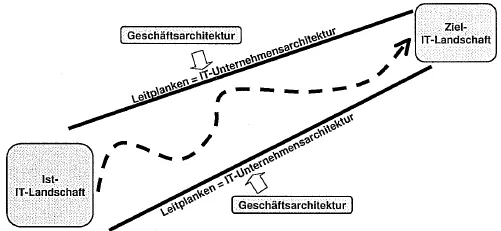 Figure 10: Architecture management and IT enterprise architecture.18
Schick describes the core goals of IT architecture development as:19
- Creating a clear frame of reference for concrete decisions ahead of implementation projects,
- Structuring and organizing the application and infrastructure landscape (modularizing, scaling, harmonizing, etc.),
- Identifying/objectifying the need for action with and toward the departments as part of operational planning and the medium-term IT development plan,
- Creating the evaluation framework for the necessary prioritization and focusing of IT activities,
- Defining concrete requirements and standards (framework conditions, technologies) and ensuring the conformity of developments,
- Steering necessary IT changes using migration plans (IT roadmap).
In short, the IT architecture answers the question of what IT support the company needs to implement the IT strategy. Conversely, this means that developing the target IT architectures always follows the goals of the IT strategy.20
4.4. Designing IT Processes and Organization
The change of IT from a cost factor to a business partner or “enabler” for new business areas described in chapter 2.2 is also reflected in the development of the IT processes and the design of the IT organization. Nevertheless, IT processes in nearly all companies are “supporting processes”, whose goal must be to support the “value-adding” business processes in the best possible way - that is, as economically as possible.21
Even small and micro enterprises have some core IT processes that must be taken into account in the IT strategy. According to Brogli, these include:22
- Development and/or procurement of IT applications
- Training and skill management
- IT consulting
- IT operations
- Hardware and software management
- Technology management
- Quality management
- Risk management
- Controlling
A detailed elaboration of these processes would go beyond the scope of this thesis. Therefore, only a short overview is given here, focusing on which processes small and micro enterprises can best have supported by a service provider. For a detailed description of these and other IT processes, see the ITIL reference model.23
The development and procurement of IT applications, hardware, software and technology management, and IT consulting are suitable for outsourcing in almost all small businesses. For these processes, the company can benefit greatly from the synergy and economy-of-scale effects of an IT service provider.24 Outsourcing IT operations to a service provider with extensive know-how is also often more economical for small companies than hiring or training their own staff for IT operations.23
In risk and quality management and in controlling, a service provider can only act in a supporting or advisory role and supply information as input for these processes. Carrying out these processes, however, is up to the company itself.25 Training and skill management in IT can also be supported by a service provider, for example through training courses.
The decisions on the IT processes form the basis for developing the IT organization. Using the requirements from the IT strategy and IT governance, an organizational concept for using IT resources throughout the company is created. Wintersteiger and Tiemeyer suggest answering at least the following 8 important questions in this concept:26
- What significance does IT have for the company?
- Who are the most important stakeholders, and in what form are they involved?
- What has to be done in-house, and which resources are needed?
- What is sensibly outsourced to third parties?
- What degree of centralization or decentralization of IT in the company is desired?
- How much money may be spent on IT, and how is it used?
- How do you ensure the right qualification of the IT staff?
- How do you ensure a good project culture?
For small and micro businesses without their own IT staff, whose core competence is therefore not in IT, the main question at this point is which activities can be carried out in-house with the available resources and which should be outsourced.27
4.5. Creating the Project Portfolio
In the course of implementing the IT strategy, even small companies continuously have IT projects to select, evaluate and prioritize. The basis for this is the project description, which is subsequently also used to work out the project plans and for the actual implementation.28 The most difficult step, however, is evaluating and prioritizing or postponing the individual projects.
Laudon, Laudon & Schoder provide some evaluation criteria for prioritizing these projects:29
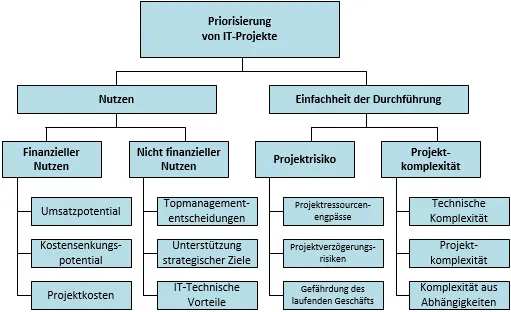 Figure 11: Criteria for prioritizing IT projects.30
From the checked and evaluated project portfolio, the rough plans and implementation variants of the projects are then worked out and implementation is initiated. The next chapter is devoted to nine example fields of action in which projects could be carried out as part of implementing an IT strategy. Practical experience proves that it makes sense for small companies to have an experienced service provider accompany the entire process. They benefit both from the consultant’s technical expertise and from practical experience in running projects.31
Footnotes
-
Cf. (Schmid, IT-Strategie, 2007, p. 11). ↩
-
Cf. (Wintersteiger & Tiemeyer, 2011, p. 63), (Mussnig & Granig, 2007, p. 139f). ↩
-
Cf. (Mussnig & Giermaier, 2007, p. 285ff). ↩
-
Cf. (Wintersteiger & Tiemeyer, 2011, p. 76f), (Mussnig & Giermaier, 2007, p. 284f). ↩
-
Source: adapted from (Schmid-Kleemann, 2004, p. 159). ↩
-
Cf. (Mussnig & Giermaier, 2007, p. 285). ↩
-
Cf. (Blankenhorn & Thamm, 2008, p. 14f), (Ward & Peppard, 2005, p. 209ff), (Schmid, IT-Strategie, 2007, p. 31f). ↩
-
Cf. (Schmid, IT-Strategie, 2007, p. 32), (Krcmar & Schwertsik, 2011, p. 356), (Ward & Peppard, 2005, p. 208). ↩
-
Cf. (Mussnig & Mödritscher, 2007, p. 383f). ↩
-
Cf. (Mussnig & Mödritscher, 2007, p. 385). ↩
-
Source: adapted from (Schmid-Kleemann, 2004, p. 161). ↩
-
Cf. (Lux & Hauser, 2007, p. 28), (Scheibeler, 2004). ↩
-
Cf. (Blankenhorn & Thamm, 2008, p. 15). ↩
-
Cf. (Haberfellner & Lang, 2007, p. 4). ↩
-
Cf. (Blankenhorn & Thamm, 2008, p. 12), (Dern, 2007, p. 12f). ↩
-
Cf. (Wintersteiger & Tiemeyer, 2011, p. 52). ↩
-
Cf. (Dern, 2007, p. 13). ↩
-
Source: (Dern, 2007, p. 13). ↩
-
Cf. (Schick, 2010, p. 108), (Dern, 2003, p. 18). ↩
-
Cf. (Wintersteiger & Tiemeyer, 2011, p. 65). ↩
-
Cf. (Wintersteiger & Tiemeyer, 2011, p. 68). ↩
-
Cf. (Brogli, 1996), (Wintersteiger & Tiemeyer, 2011, p. 68). ↩
-
Cf. (Köhler, 2007, p. 127f), (Haberfellner & Lang, 2007, p. 1f). ↩
-
Cf. (Bachmann, 2011, p. 650). ↩
-
Cf. (Wintersteiger & Tiemeyer, 2011, p. 69f). ↩
-
Cf. (Köhler, 2007, p. 96ff). ↩
-
Cf. (Wintersteiger & Tiemeyer, 2011, p. 73). ↩
-
Cf. (Laudon, Laudon, & Schoder, 2010, p. 835). ↩
-
Source: adapted from (Laudon, Laudon, & Schoder, 2010, p. 835). ↩
-
A consultant can, for example, estimate the time required for a project more easily based on experience with similar projects. ↩