
Chapter 2: Definitions
Chapter 2 of my master's thesis "Outsourcing the IT Strategy Development Process in Austrian Small and Micro Enterprises"
Contents
This article series contains my master’s thesis “Outsourcing the IT Strategy Development Process in Austrian Small and Micro Enterprises”, which I wrote as part of the university program Management in Information and Business Technologies at the Alpen-Adria-Universität Klagenfurt.
- Chapter: Introduction
- Chapter: Definitions
- Chapter: Relevant Environments of Small and Micro Enterprises in Austria
- Chapter: Strategic Goals and Critical Success Factors of an IT Strategy
- Chapter: Strategic Courses of Action for Small and Micro Enterprises Regarding the Use of Information Technology
- Chapter: IT Controlling in Small and Micro Businesses
- Chapter: Summary and Outlook
2. Definitions
2.1. Small and Micro Enterprises
The European Commission distinguishes micro, small and medium-sized enterprises by their number of employees and by annual turnover or annual balance sheet total. Accordingly, micro enterprises are companies with an annual balance sheet total or annual turnover below €2 million and fewer than 10 employees. For small enterprises, the limit is €10 million annual balance sheet total or annual turnover and 50 employees:1
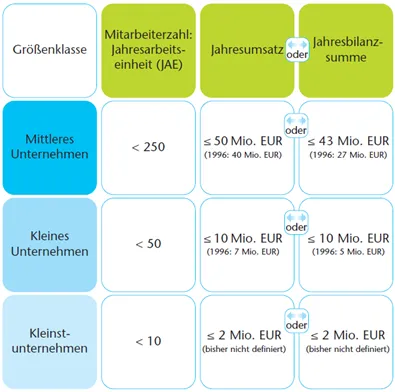 Figure 2: Thresholds for micro, small and medium-sized enterprises.2
The number of employees is calculated using the annual work unit (AWU). Part-time or seasonal workers are counted only with the number of work units they actually performed.
Over 98 percent of companies in Austria fell into the category “small and micro enterprises” in 2011.3 Of these, only 25 percent employed IT staff.4
The presentation of the SME data for Austria in Table 1 clearly shows the need to deal with the topic - especially because even in the few small companies that employ an IT person, that person works rather technically or operationally and hardly at all strategically.
| Employment size group | Number of companies | Share |
|---|---|---|
| 0 - 9 | 377,694 | 92.3% |
| 10 - 49 | 25,499 | 6.2% |
| 50 - 249 | 4,961 | 1.2% |
| 250 and more | 1,090 | 0.3% |
Table 1: SME data for Austria.5
A 2012 study by Vanson Bourne6 shows that 72 percent of small companies (up to 100 employees) in Central Europe have less than €40,000 per year, and only 11 percent of companies more than €100,000, available as an IT budget:7
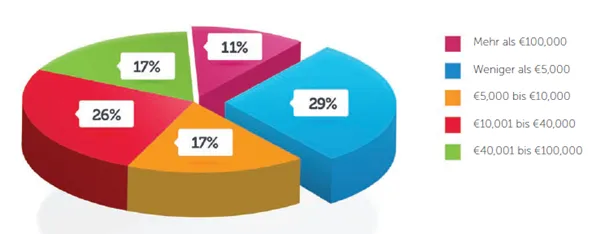 Figure 3: Annual IT budget of small companies.8
2.2. IT Strategy
The term “strategy” originally comes from warfare and, hundreds of years ago, already described principles such as “concentrating one’s own forces”, “keeping the initiative”, “knowing one’s own strengths and weaknesses”, taking environmental factors into account, and working through problems and tasks in a focused, sequential manner.9
Since IT plays a central role in companies of all kinds today and more and more people take part in shaping IT, a generally understandable guide, that is, a corresponding IT strategy, is indispensable. Because of the often long planning horizon of IT projects and the costs involved, measures must be coordinated closely with the business units.
An IT strategy is dedicated to increasing economic efficiency through the use of IT and therefore cannot be considered in isolation, but is derived from the business strategy.10
Conversely, as a technological driver of innovation, the IT strategy must also be able to influence the business strategy. In the literature, this is called “IT/business alignment”. That is, the more closely the IT and business strategies are aligned, the greater the competitive advantages.11
To align IT strategically in the best possible way, it is indispensable to know the exact requirements that the departments and the company place on IT, as well as current IT trends. The IT strategy must be oriented to the business cycles and at the same time leave room for updates during the year.12
An IT strategy can have very different levels of detail. In large organizations, a strategy paper can be very comprehensive and complex and go into the individual partial strategies in detail. The IT strategy must always ensure that it is implementable and measurable. Furthermore, continuous monitoring of the maturity level and effectiveness must be ensured. For this reason, a list of agreements and actions that IT wants to pursue in the future is sufficient in most cases for small and micro enterprises.13 Larger companies work on the same basis, but because of increasing complexity and internationality they are usually bound by additional regulations. Worth mentioning here are requirements such as the Sarbanes-Oxley Act (SOX) or stock exchange regulations.
The goal of every IT strategy should be to raise the standing of IT and turn it from a pure cost factor into a supporter and possible “enabler” of new business models, that is, to increase the value chain.14
The basic principle is:
Business drives IT.
Figure 4 shows an example of how IT can establish its standing as something that increases the value chain. In this example, IT ultimately counts as a “business enabler”:
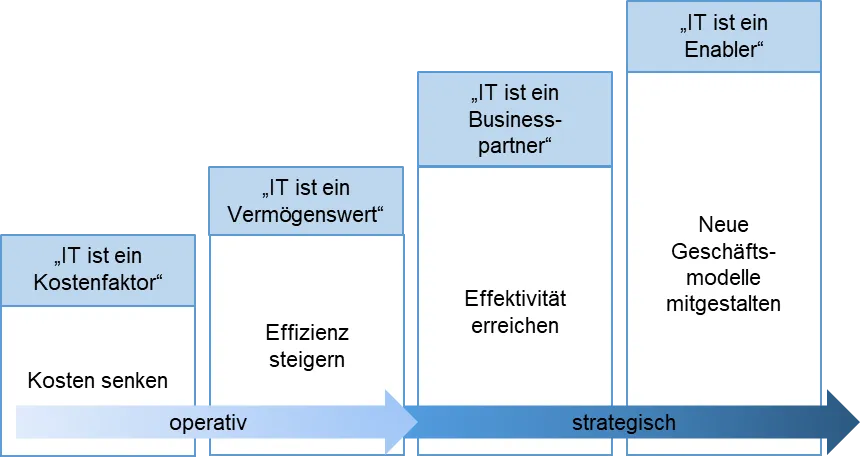 Figure 4: Standing of IT.15
Critical authors consider the discussion about adapting the IT strategy to the business strategy idle, since the IT strategy cannot follow any other requirements anyway. For them, IT is an integral part of the company that must already be taken into account in the business strategy.16 This view, too, does nothing to change the problem already described of IT in small and micro enterprises not being strategically aligned.
According to personal experience, however, the service recipient has to be taken into account as well. IT services must be aligned with both the company and the users. Only then is it possible to form an economical, success-oriented business cycle. The ITIL framework in particular offers a comprehensive catalog of ideas for this.17
Companies without an IT strategy risk suffering long-term financial disadvantages through oversized or undersized IT investments, long innovation cycles or costly parallel IT structures. Likewise, providing a future-proof IT infrastructure is hard to achieve without a strategic approach.18
Developing an IT strategy is an iterative process and is usually divided into four to five steps.19 The total lead time should not exceed 6 months.20 Personal experience shows, however, that in small companies the initial IT strategy process hardly takes longer than 3 months.
The first step in developing an IT strategy is deriving the goals from the corporate strategy, creating a shared understanding and defining strategic fields of action.21 Since communication between IT, management and the departments in small companies is often insufficient and a documented and operationalized corporate strategy rarely exists, IT management is often left on its own when deriving the IT strategy.22
In this situation, it makes sense to determine and document the key factors for the IT strategy together with the company management and the heads of departments. In micro enterprises, it also makes sense to involve experienced employees in the strategy process.23 The key questions that must be answered in this discussion are, for example:24
- What are the company’s main business areas and how will they develop in the future?
- Which industry trends must be taken into account when developing the IT strategy and which challenges have to be considered?
- What strategic objectives do the individual departments pursue and what requirements do they place on IT and the services and solutions it offers?
From these questions, the strategic goals and the critical success factors for the IT strategy can be derived.
The second step comprises analyzing the current state of IT. It is important to look at IT from all perspectives that matter for the company’s success and not to concentrate on the user’s view alone.25
In this phase, the company’s core processes are identified, the degree of fulfillment is examined and thus the degree of support by the company’s IT is assessed.26 With this information, the IT strategy is then positively aligned with the company goals in the following steps. There is a whole range of tools for diagnosing the current state from different perspectives. While analyzing the external perspective - such as industry or competitor analyses - is hard for small and micro businesses because of scarce resources, the internal perspective can be analyzed very easily. A SWOT analysis27, for example, can be used to work out the strengths and weaknesses of the IT area.28
In the third step, the goals are formulated on the basis of the results collected so far. The goals in turn form the basis for developing the concept and deriving the IT principles and partial strategies.28 Starting from current challenges and the goals, those responsible for IT - ideally supported by a knowledgeable IT service provider - should develop or adapt the strategic IT goals in a workshop.
Step four comprises developing the IT architecture on the basis of the developed partial strategy, taking into account the information supplied by the departments. Essential components are the company’s architecture principles, for example the technology, application, information or security architectures, as well as the functional architectures, such as business areas, processes and tasks.29
In the fifth and last step, the project portfolio is developed and the IT strategy is implemented continuously.30 This does not mean setting the strategic goals once and for all, but adapting them as required through continuous planning and control in a permanent improvement process.
Figure 5 illustrates the relationships between the elements of IT strategy development based on the ITMC I2Cmethod:31
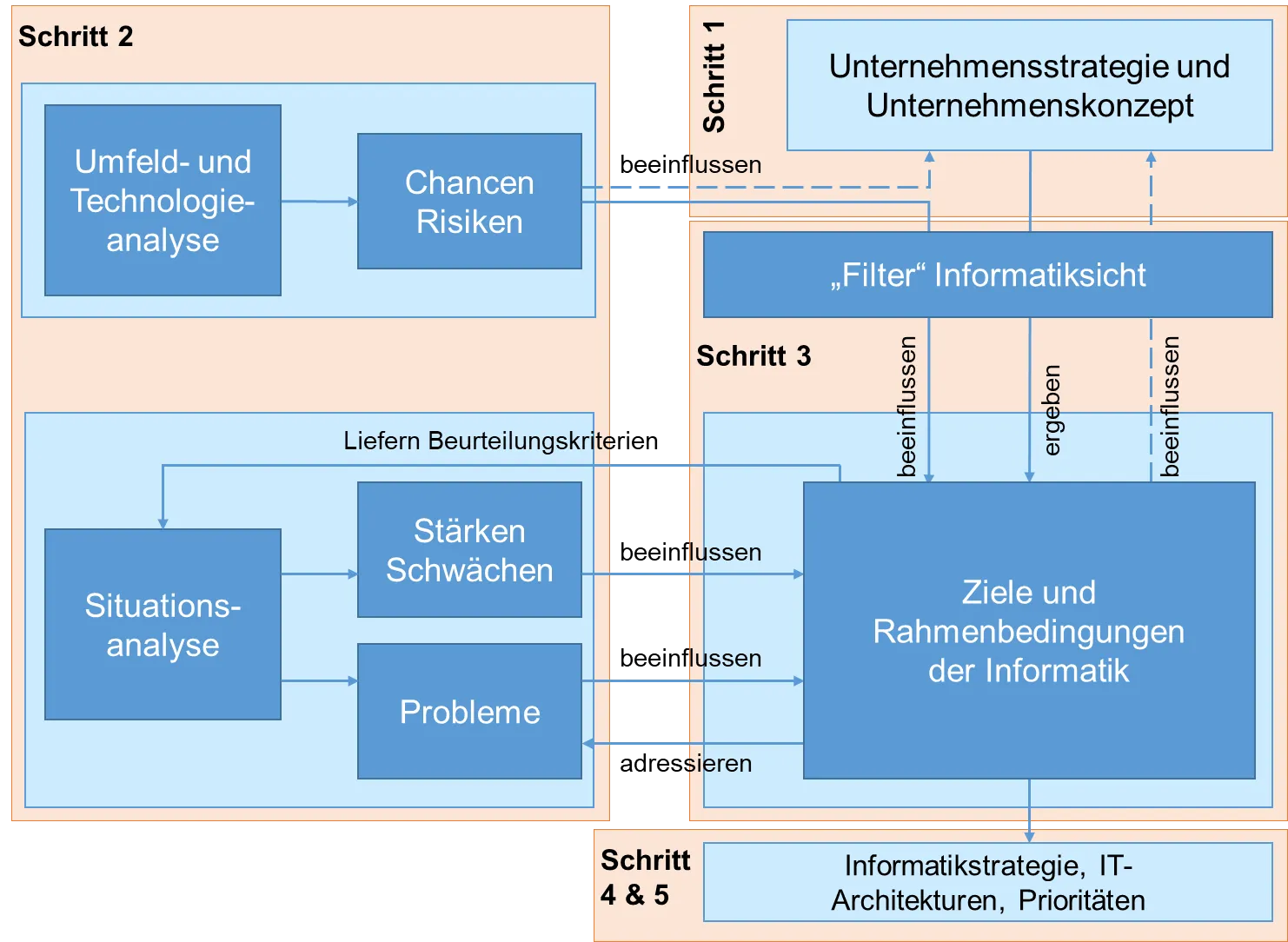 Figure 5: Relationships between the elements of IT strategy development.32
In conclusion, it can be summed up in the words of Wintersteiger and Tiemeyer:
In every organization - regardless of size and industry - there should be a concept or procedure model that enables the development of an IT strategy aligned with the company goals (…). From the IT strategy, quality goals for the respective year can be derived, risk assessments made and sensible IT projects defined.33
2.3. Outsourcing
“Outsourcing” is understood as the transfer of processes, such as running the data center or maintaining and developing a business application, to an external provider.34 The literature calls the outsourcing client - in the broadest sense the “customer” - the “service recipient”, while the outsourcing provider or supplier is called the “service provider” or “service supplier”.
Outsourcing is mainly used for business areas that have clearly defined interfaces and can therefore be separated easily. This gives both the service provider and the service recipient great advantages: The outsourcing service provider benefits from concentrating on its core competencies, which lets it offer its services more economically than companies that haven’t specialized in them.35 The service recipient in turn gains access to specialists or special resources that it cannot provide in its own company, or only at higher cost.36
In its survey of IT trends for 2012, Capgemini found that in about 30 percent of outsourcing partnerships the service provider is expected to act not only as a service provider but as a full business partner in developing innovations and jointly achieving business goals.37
In the long run, outsourcing is only sustainable if both partners benefit from it.38
Every outsourcing project also carries risks. Business relationships in IT outsourcing are inherently complex and require a high level of management attention and control from both sides.39
Footnotes
-
Cf. (Europäische Kommission, 2003, n.p.). ↩
-
Source: (Europäische Kommission, 2006, p. 14). ↩
-
Cf. (WKO, 2011, p. 1). ↩
-
Cf. (Djahangiri, Edelhofer, & Haßl, 2013, p. 20). ↩
-
Source: (WKO, 2011, p. 1) (slightly modified). ↩
-
Commissioned by Dell and Intel. ↩
-
Cf. (Vanson Bourne, 2012, p. 5). ↩
-
Source: (Vanson Bourne, 2012, p. 5). ↩
-
Cf. (Sunzi, 1988, pp. 9, 14 and 24f), (von Clausewitz, 2007, pp. 63, 77ff and 94). ↩
-
Cf. (Albayrak & Schwarze, 2007, p. 9), (Wintersteiger & Tiemeyer, 2011, p. 44), (Blomer & Bernhard, 2003, p. 82), (Blankenhorn & Thamm, 2008, p. 10), (Schmid, 2007, p. 71ff). ↩
-
Cf. (Laudon, Laudon, & Schoder, 2010, p. 822), (Rüter & Schröder, 2006, p. 44f). ↩
-
Cf. (Wintersteiger & Tiemeyer, 2011, p. 45), (Ward & Peppard, 2005, p. 125), (Rüter & Schröder, 2006, p. 47). ↩
-
Cf. (Albayrak & Schwarze, 2007, p. 17), (Wintersteiger & Tiemeyer, 2011, p. 44), (Rüter & Schröder, 2006, p. 47). ↩
-
Cf. (Hanschke, 2009, p. 12), (Schmid, 2007, p. 71). ↩
-
Source: (Hanschke, 2009, p. 12) (slightly modified). ↩
-
Cf. (Dernbach, 2003, p. 15). ↩
-
The “Information Technology Infrastructure Library” (ITIL) is an extensive collection of best practices for IT service management and, thanks to its comprehensive and detailed elaboration, counts as an industry standard. ↩
-
Cf. (Tiemeyer, 2011, p. 37), (Rüter & Schröder, 2006, p. 46). ↩
-
Cf. (Schröckner, Grundlagen IT Strategie, 2008, p. 15), (Wintersteiger & Tiemeyer, 2011, p. 51f). ↩
-
Cf. (Wintersteiger & Tiemeyer, 2011, p. 51). ↩
-
Cf. (Schmid, 2007, p. 55). ↩
-
Cf. (Dernbach, 2003, p. 32ff), (Petek, Rausch, & Mussnig, 2007, p. 332f). ↩
-
Cf. (Mussnig, Giermaier, & Sitter, 2007, p. 77). ↩
-
Cf. (Blomer & Bernhard, 2003, p. 82). ↩
-
Cf. (Wintersteiger & Tiemeyer, 2011, p. 51). ↩
-
Cf. (Blankenhorn & Thamm, 2008, p. 10). ↩
-
SWOT is an acronym for Strengths, Weaknesses, Opportunities and Threats. ↩
-
Cf. (Wintersteiger & Tiemeyer, 2011, p. 65ff). ↩
-
Cf. (Schmid, 2007, p. 66f). ↩
-
Cf. (Pörtig, 2011, p. 7ff). ↩
-
Source: adapted from (Wintersteiger & Tiemeyer, 2011, p. 61). ↩
-
(Wintersteiger & Tiemeyer, 2011, p. 74). ↩
-
Cf. (Laudon, Laudon, & Schoder, 2010, p. 871). ↩
-
Cf. (Haberfellner & Lang, 2007, p. 1 and 4), (Köhler, 2007, p. 127f). ↩
-
Cf. (Laudon, Laudon, & Schoder, 2010, p. 948). ↩
-
Cf. (Capgemini, 2012, p. 5 and 24). ↩
-
(Haberfellner & Lang, 2007, p. 4). ↩
-
Cf. (Rüter & Schröder, 2006, p. 193f), (Resch, Brenner, & Schulz, 2009, p. 56ff), (Köhler, 2007, p. 117). ↩